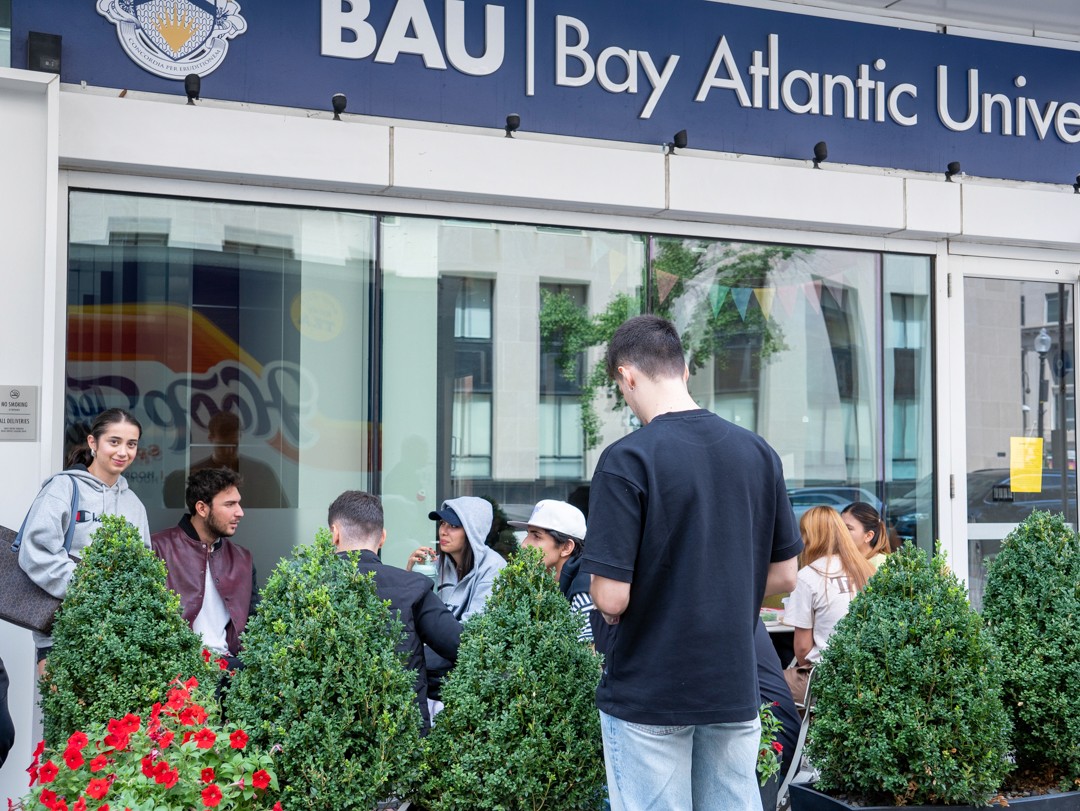
The Political Science and International Relations Program at BAU offers the advantage of being located in the heart of Washington, DC. Program students have the opportunity to observe politics in practice by taking courses that cover all aspects of Political Science as well as visiting government agencies, think tanks, and research centers. Guest lectures from government service, the policy community, lobbying firms, and civil society organizations enrich the learning experience by providing real-world context to the concepts, ideas, and topics discussed in class.
Political Science and International Relations is obtained by completing the program's 120 credit hours of course requirements. Of these credit hours, 63 are core courses, 42 are general education courses, and 18 are elective courses. Students must fulfill both the core course requirements and the general education requirements.
In addition, students must meet the following criteria:
Students enrolled in the undergraduate program must maintain a minimum Cumulative Grade Point Average (CGPA) of 2.0 on a 4.00 scale to qualify for a BA degree, remain in good standing, and graduate.
The Maximum Duration Framework (MTF) determined for the completion of the BA program is 180 credit hours.
An undergraduate student may transfer up to 60 credit hours earned from accredited institutions.
Students cannot receive degree credit for a grade that is considered failing (below D or below 1.00 on a 4.00 scale).
Students who complete the program will be able to do the following.
To define and explain the main theories of political science and international relations.
To apply the main theories of political science and international relations to real-world problems.
To analyze the mutual dependence between political ideas in the modern world and the reality of political processes.
To assess the role played by the main actors in political processes and international relations.
To evaluate complex issues by forming evidence-based opinions and judgments in writing and speaking.
To understand the use of data in political science and international relations analyses.
To demonstrate the knowledge and competence required to engage in civil, social, and political activities as a responsible citizen.
To understand others whose identities, beliefs, behaviors, values, and perspectives differ from their own.